

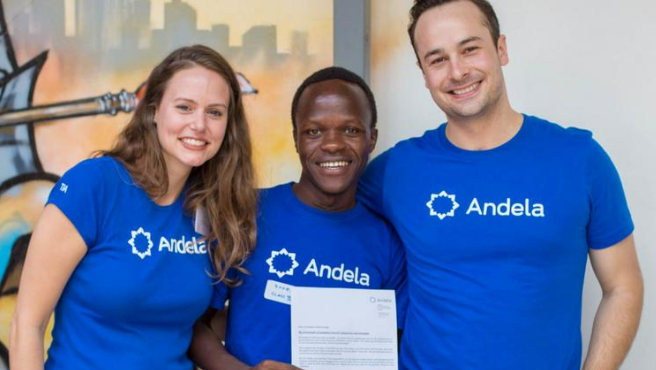

In 2014, a bold idea emerged from Lagos.
What if Africa’s biggest export wasn’t oil, minerals, or agricultural products—but software talent?
At the time, this sounded unrealistic.
Africa was rarely discussed in conversations about global technology talent.
Yet within a few years, Andela would train thousands of engineers, attract hundreds of millions of dollars in investment, and partner with companies like Microsoft, Facebook, and GitHub.
The company didn’t succeed simply because it had a clever idea.
It succeeded because it demonstrated something far more powerful: Change Readiness.
In uncertain and institutionally complex environments, successful ventures develop three critical capabilities:
- Customer Clarity
- Collectivism
- Commitment to Impact
Andela’s growth illustrates how these three capabilities work in practice.
1. Customer Clarity: Seeing Opportunity Where Others Saw Scarcity
Most people looked at Africa and saw a shortage of skilled software engineers.
Andela’s founders saw something different.
They saw an overlooked talent pool.
Companies in Silicon Valley were struggling with developer shortages, while thousands of brilliant young Africans lacked access to global tech opportunities.
The problem wasn’t talent.
The problem was connection.
Andela built its model around this insight.
Instead of creating another coding school, the company created a global talent marketplace that:
- identified promising developers
- trained them to world-class standards
- connected them with international technology companies
In other words, Andela focused on customer pain on both sides of the market:
- companies needed engineers
- developers needed opportunity
This clarity allowed the company to position itself not as a training provider, but as a global talent partner.
2. Collectivism: Building Ecosystems, Not Just Companies
Change-ready ventures rarely succeed alone.
They build networks of legitimacy.
From the beginning, Andela formed powerful partnerships that helped it scale credibility.
Key partnerships included:
- The Chan Zuckerberg Initiative
- Microsoft
- Global venture capital firms
These alliances did more than provide funding.
They signaled that African talent could compete globally.
Inside the company, collectivism also shaped Andela’s culture.
Developers weren’t treated simply as employees.
They were part of a learning community.
The company invested heavily in:
- mentorship
- peer learning
- collaborative training environments
This collective approach helped Andela maintain high standards while developing thousands of engineers.
3. Commitment to Impact: Building a Model That Evolves
Many startups cling to their original business model.
Change-ready companies adapt as the environment changes.
Andela’s first model focused on training developers through a highly selective fellowship program.
Over time, however, the company realized something important.
The global demand for African talent was far larger than the fellowship pipeline could support.
So Andela pivoted.
Instead of focusing only on training, the company transformed into a global talent marketplace, connecting thousands of engineers across dozens of countries with remote jobs.
This shift dramatically expanded its reach.
Today Andela operates across multiple continents, helping companies hire top engineering talent while giving African developers access to global opportunities.
The mission remained the same:
unlocking human potential through technology.
But the model evolved.
That evolution reflects the essence of Commitment to Impact.
The Real Lesson: Why Change Readiness Matters
The story of Andela challenges a common myth about entrepreneurship.
Success is not just about having a great idea.
It is about building organizations capable of navigating complex environments.
Andela succeeded because it developed three capabilities:
- Customer Clarity — understanding the true problem behind talent shortages
- Collectivism — building partnerships and communities that created legitimacy
- Commitment to Impact — evolving the business model to scale opportunity
In emerging markets especially, entrepreneurs must do more than build products.
They must build institutions that make new markets possible.
And that requires one critical capability:
Change Readiness.
To explore the concept of Change Readiness in depth, download a free chapter from my Springer Nature book, Institutional Entrepreneurship in African Fintech.